+86 13472864215 ess3@ivy-metering.com


If you're working with smart energy meters, industrial automation, or IoT energy systems, you've likely come across two common communication protocols: Modbus RTU and Modbus TCP.
While they share the same protocol foundation, they differ significantly in communication method, infrastructure, and real-world applications.
In this guide, we'll break down:
The key differences between Modbus RTU and TCP
Real application scenarios
How to choose the right solution for your project
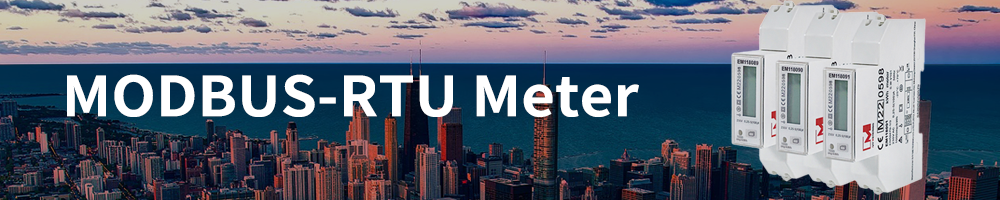
1、What is Modbus RTU?
Modbus RTU (Remote Terminal Unit) is a serial communication protocol based on RS485 interface, widely used in industrial environments.
Key Features:
Uses RS485 (A/B terminals)
Master-slave communication
Daisy-chain wiring structure
Long-distance communication (up to 1200 meters)
Strong anti-interference capability
Typical Applications:
Industrial automation systems
PLC-controlled environments
Factory energy monitoring
Building management systems (BMS)
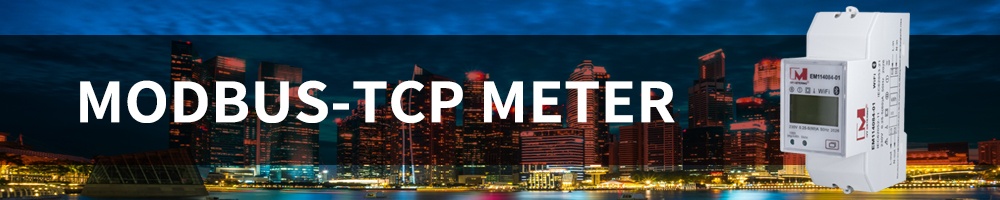
2、What is Modbus TCP?
Modbus TCP (Transmission Control Protocol) is a network-based version of Modbus that runs over Ethernet and TCP/IP networks.
Key Features:
Uses Ethernet (RJ45 port)
Client-server communication
Works over LAN / WAN / Internet
High-speed data transmission
Supports remote access and cloud integration
Typical Applications:
IoT energy monitoring systems
Smart buildings and commercial projects
Remote metering systems
Cloud-based energy platforms
3、Modbus RTU vs Modbus TCP (Comparison Table)
Feature | Modbus RTU | Modbus TCP |
Communication Type | Serial (RS485) | Ethernet (TCP/IP) |
Speed | Slower | Faster |
Distance | Up to 1200m | Depends on network |
Device Limit | Limited (≈32 nodes) | Scalable |
Remote Access | Not direct | Fully supported |
Cost | Lower | Slightly higher |
Reliability | Very high (industrial) | Depends on network |
4、Key Differences Explained
4.1 Communication Infrastructure
RTU requires physical RS485 wiring
TCP uses existing network infrastructure
4.2 Installation Complexity
RTU → more wiring, but simple logic
TCP → less wiring, but needs network setup
4.3 Scalability
RTU → limited expansion
TCP → easy to scale across buildings or cities
4.4 Data Accessibility
RTU → local access only
TCP → remote monitoring, cloud integration
5、Use Case Comparison
When to Choose Modbus RTU
✔ Industrial environments with strong interference
✔ Short-range, local monitoring
✔ Cost-sensitive projects
✔ PLC-based control systems
When to Choose Modbus TCP
✔ Smart energy management systems
✔ Remote monitoring & control
✔ IoT / cloud integration
✔ Commercial & large-scale deployments
6、Can You Convert RTU to TCP?
Yes. The latest product launched by IVY METERING - J119028 Converter use RS485 to TCP/4G converters to upgrade legacy RTU devices.
Benefits:
Keep existing RTU meters
Enable remote monitoring
Reduce infrastructure cost
This is widely used in energy retrofit projects.

7、Our Smart Meter Solutions
We provide both Modbus RTU and Modbus TCP smart meters, designed for industrial and IoT applications.
Our Advantages:
DIN-rail compact design
RS485 / Ethernet / WiFi / 4G options
Built-in relay control (optional)
High accuracy energy monitoring
Customizable solutions for EU market
Need Help Choosing the Right Meter?
Contact our engineers for solution advice
Get a free project consultation
Request pricing & datasheets
IVY METERING CO., LTD.


